Is It Legal to Download Instagram Videos and Reels?
Downloading is legal in some cases and risky in others — the details matter.
Quick answer: Downloading an Instagram video for personal, private viewing is generally low-risk under US copyright law. Downloading someone else's video and reposting, editing, or using it commercially without permission is where the legal risk shows up, since the original creator holds the copyright the moment they post it.
What US copyright law actually says
Under US copyright law, a creator owns the rights to a video, photo, or reel the moment they create it. Posting it publicly on Instagram doesn't hand those rights over to anyone else. This is the same rule that applies to a photo on Flickr or a video on YouTube — publishing something online doesn't put it in the public domain.
What copyright law regulates is use, not simply having a copy. Saving a video to your phone to watch later is different, legally, from downloading that same video and posting it as your own content, using it in an ad, or building a product around it.
Is downloading itself illegal?
Downloading a copy of a public Instagram video for personal use — watching it offline, saving a memory, referencing it privately — carries very little legal risk in practice. Courts and copyright holders are almost never concerned with private, non-distributed copies. Copyright law is built around unauthorized distribution and public use, not quiet personal storage.
That said, "very little risk" isn't the same as "risk-free." Downloading from a private account you don't have permission to view, or downloading content specifically marked as protected or restricted, raises the risk level even for personal use.
What Instagram's terms of service say
Separate from copyright law, Instagram's own terms of service state that you shouldn't copy, download, or use content from the platform outside of the built-in sharing tools, unless you have permission from the rights holder or the law allows it. This is a contract between you and Instagram (technically Meta), not a criminal law.
In practice, this means: Instagram could restrict your account for violating its terms, but that's a platform-level consequence, not a criminal charge. Most everyday downloading of public content for personal use doesn't trigger enforcement, but it's worth knowing this rule exists, especially if you're downloading at scale or automating it.
Good to know: Instagram's own "download" option (visible when a creator has enabled it on their post) is the clearest sign that downloading is expected and permitted for that specific piece of content.
Personal use vs. reposting
The biggest legal difference isn't downloading itself — it's what happens after. Here's how the two most common situations compare.
| Situation | Typical legal risk | Why |
|---|---|---|
| Saving a public video to watch offline | Low | Private, non-distributed personal copy |
| Reposting the same video on your own account without credit | Higher | Public redistribution of someone else's copyrighted work |
| Using a downloaded clip in a paid ad or product | High | Commercial use without a license or permission |
| Reposting with credit and the creator's permission | Low | Permission from the copyright holder resolves most concerns |
How to check before you download
Step 1: Check whether the account is public or private
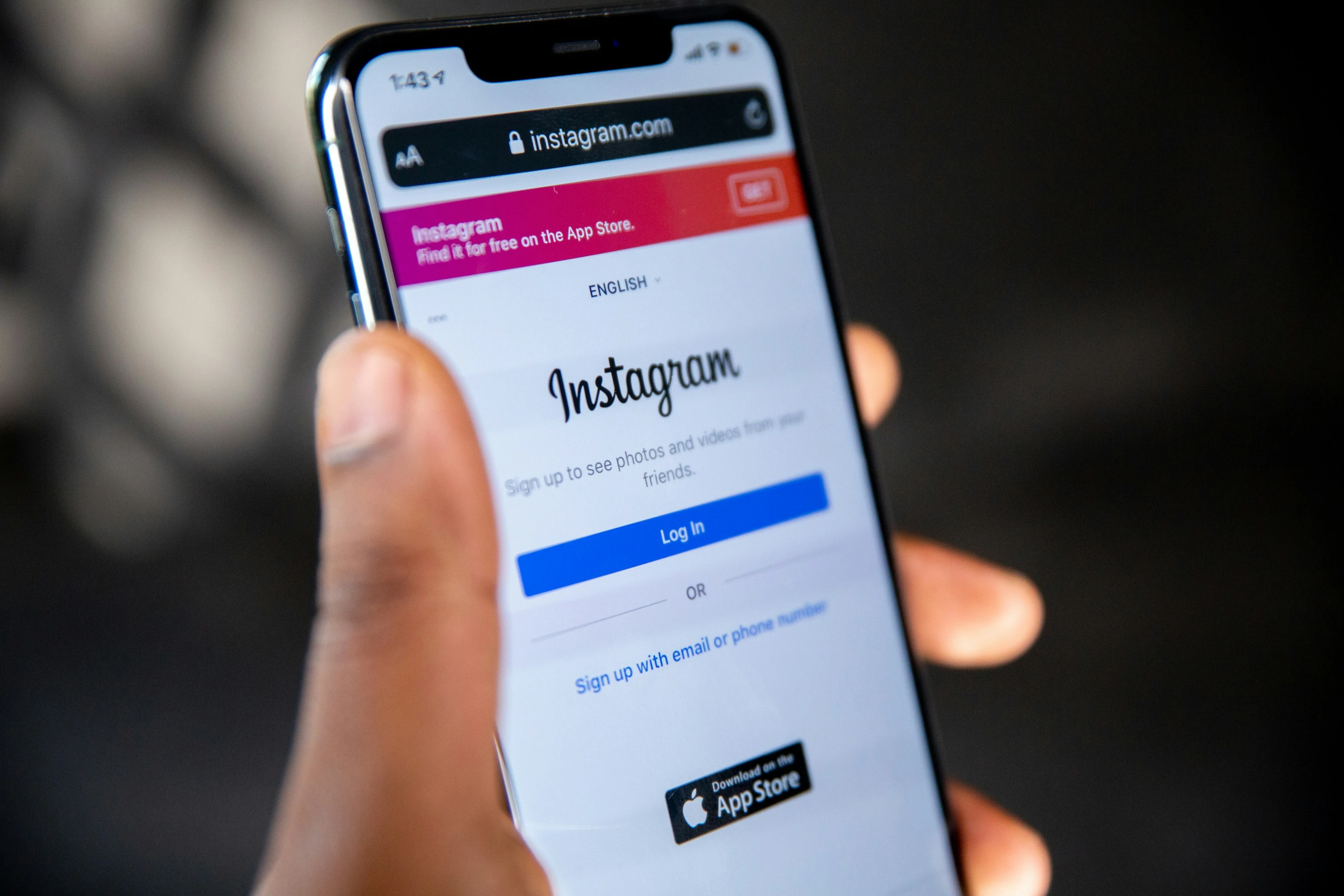
Public content only should be your starting rule. If a post is only visible because someone approved you as a follower on a private account, treat that as content shared with you specifically, not content meant for wider saving or reuse.
Step 2: Look for Instagram's own download option
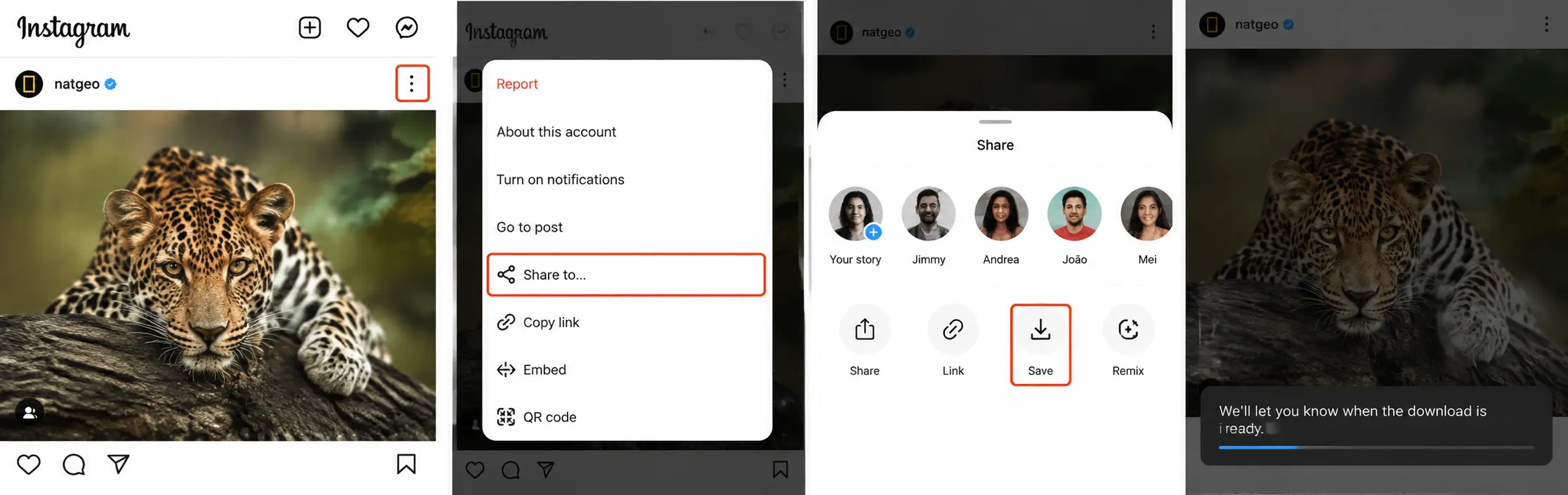
Some creators enable Instagram's native download button on Reels. If it's there, that's the clearest signal the creator is fine with people saving the content. If it's missing, a third-party downloader can still technically pull the public video, but you're relying on the general personal-use guidance above rather than explicit permission.
Step 3: Decide what you're actually going to do with it
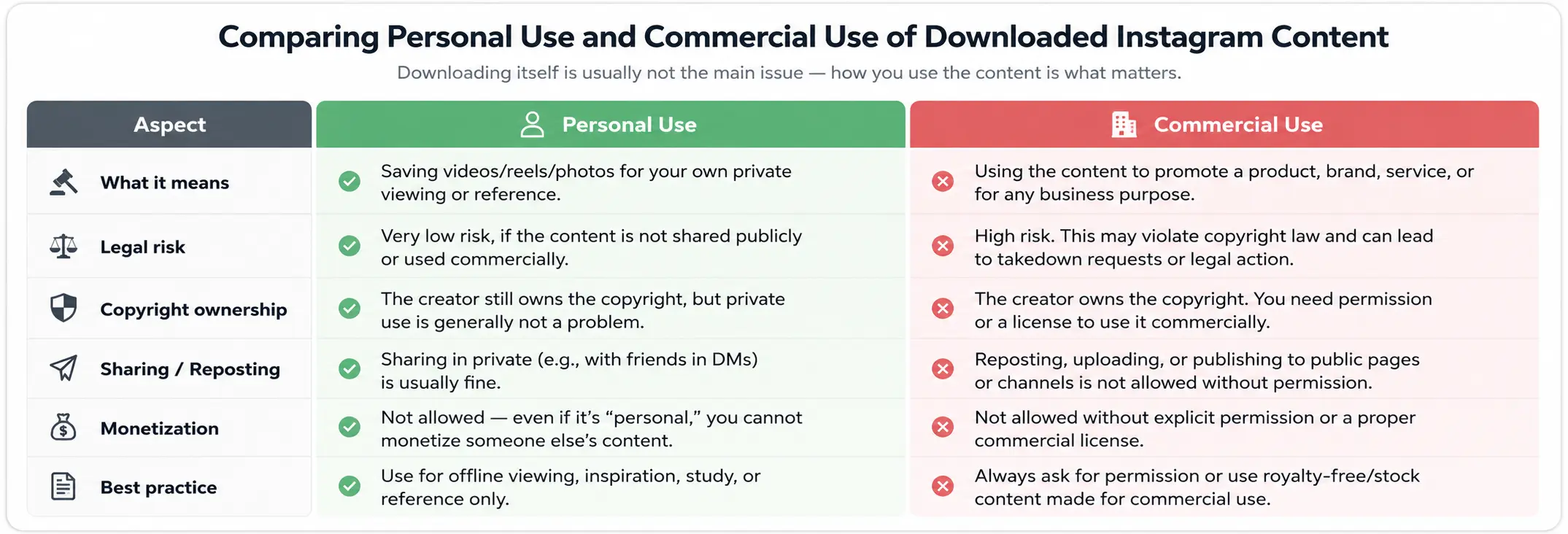
This is the step people skip. Ask yourself: is this going in a private folder, or is it going back onto the internet under your name? If it's the second one, either get permission or credit the original creator clearly, and consider reaching out first.
Common mistakes people make
- Assuming "public" means "free to reuse." Public visibility and usage rights are two different things.
- Reposting without any credit. Even a simple tag or caption credit changes how a situation is generally viewed, though it doesn't replace permission for commercial use.
- Downloading from accounts you had to request access to. Private-account content carries more risk than public content.
- Using downloaded clips in monetized content. Ad revenue or sponsorships tied to someone else's unlicensed footage is the highest-risk scenario covered in this article.
- Ignoring a takedown request. If a creator asks you to remove reposted content, doing so quickly is the simplest way to resolve most disputes before they escalate.
Best practices to stay on the safe side
- Stick to public accounts and public posts.
- Keep downloads for personal, offline use whenever possible.
- Ask the creator directly if you want to repost or reuse their content.
- Always credit the original creator if you do repost, even with permission.
- Avoid downloading and reusing content for commercial projects without a license.
- Remove content promptly if a creator raises a concern.
Need to save a public Instagram video for personal use? InsgramIO's Instagram video downloader and Reels downloader work directly from a public post link, in the highest available quality the source allows. For step-by-step instructions, see our how-to guide.
Quick summary
Downloading a public Instagram video for personal use carries low legal risk under US copyright law. The risk rises sharply once you repost, edit, or commercially use someone else's content without permission. Instagram's terms of service add a separate, platform-level layer on top of copyright law, so the safest approach is simple: keep it public, keep it personal, and ask first if you want to share it further. Results and outcomes may vary depending on the specific content and how it's used, and this article is general information, not legal advice.
Frequently asked questions
Is it illegal to download Instagram videos for personal use?
Downloading a public Instagram video to watch privately carries low legal risk under US copyright law, since it's not being redistributed or used commercially. It's not the same as being explicitly authorized, but it's rarely the focus of copyright enforcement.
Is downloading Instagram Reels illegal?
The same general rule applies to Reels as to other Instagram videos. Personal, private downloads of public Reels carry low risk. Reposting or reusing a Reel without permission raises the risk, regardless of format.
Is it illegal to download Instagram photos?
Photos are covered by the same copyright principles as videos. A public photo saved for personal use is low-risk. Reposting or commercially using someone else's photo without permission is not.
What does US copyright law say about downloading social media content?
US copyright law grants the creator ownership of their content automatically upon creation, whether or not it's registered. Publishing on Instagram doesn't waive that ownership. Copyright law primarily concerns unauthorized distribution and public use rather than private copies.
Can you get in trouble for downloading Instagram videos?
For personal, private downloads of public content, real-world consequences are uncommon. Trouble is far more likely if you repost someone's content publicly without permission, especially for commercial purposes, or if you download from private accounts without authorization.
What does Instagram's terms of service say about downloading?
Instagram's terms state that content shouldn't be copied or downloaded outside its own tools unless the rights holder allows it or the law permits it. Violating this is a platform-level issue that could affect your Instagram account, separate from copyright law itself.
Can Instagram tell if I downloaded a video?
Instagram doesn't notify a creator when someone downloads their public content using a third-party tool, since the download happens outside Instagram's own systems. This is different from actions inside the app, like screenshotting a disappearing message, which can trigger a notification in some cases.
Is it legal to repost a downloaded Instagram video with credit?
Crediting the creator is good practice and reduces friction, but it doesn't automatically grant you legal permission to repost their copyrighted content. Getting direct permission from the creator is the safest approach for reposting.
Is downloading content from a private Instagram account legal?
Content on a private account is shared specifically with approved followers. Downloading and further distributing it carries more legal and ethical risk than downloading from a fully public account.
Does using a downloaded Instagram video commercially count as copyright infringement?
Using someone else's downloaded content in a commercial project, such as an ad or paid campaign, without a license or permission is the highest-risk use case covered by copyright law and generally requires explicit authorization.
What should I do if a creator asks me to remove their content?
Removing the content promptly is the simplest and most effective way to resolve the situation. Most disputes over reposted content are settled this way without escalating further.
Is InsgramIO responsible for how I use downloaded content?
InsgramIO provides a tool for saving public Instagram content. How that content is used afterward is the responsibility of the person downloading it. Downloading from private accounts you don't have access to is not supported or condoned.